
Table of Contents
If you want to improve your trading accuracy, understanding support and resistance in forex is one of the most important skills you must learn.
After learning candlestick patterns, the next step is knowing where price is likely to react. This is exactly what support and resistance help you do.
As a beginner, I struggled with finding the perfect entry point until I discovered support and resistance. That was when everything started to make more sense.
In this guide, you will learn support and resistance in forex for beginners in the simplest way possible.
Let’s get started.
What Is Support and Resistance?
Without complicating it, I will explain support and resistance in the simplest way.
Support and resistance are key levels on a chart where price tends to react.
Support
Support is a level where price tends to stop falling and may move upward. It is an area where buyers become strong and push the market up.
Resistance
Resistance is a level where price tends to stop rising and may move downward. It is an area where sellers become strong and push the market down.
In simple terms, these are areas where buyers and sellers make strong decisions.
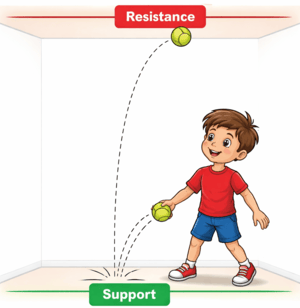
Think of it like this. Support is like the floor, and resistance is like the ceiling. When you bounce a tennis ball on the floor, it goes up toward the ceiling, and when it hits the ceiling, it comes back down.
That is exactly how price behaves in the market. It moves between support and resistance until one of them breaks.
What Happens When Support and Resistance Break
Support and resistance cannot hold forever.
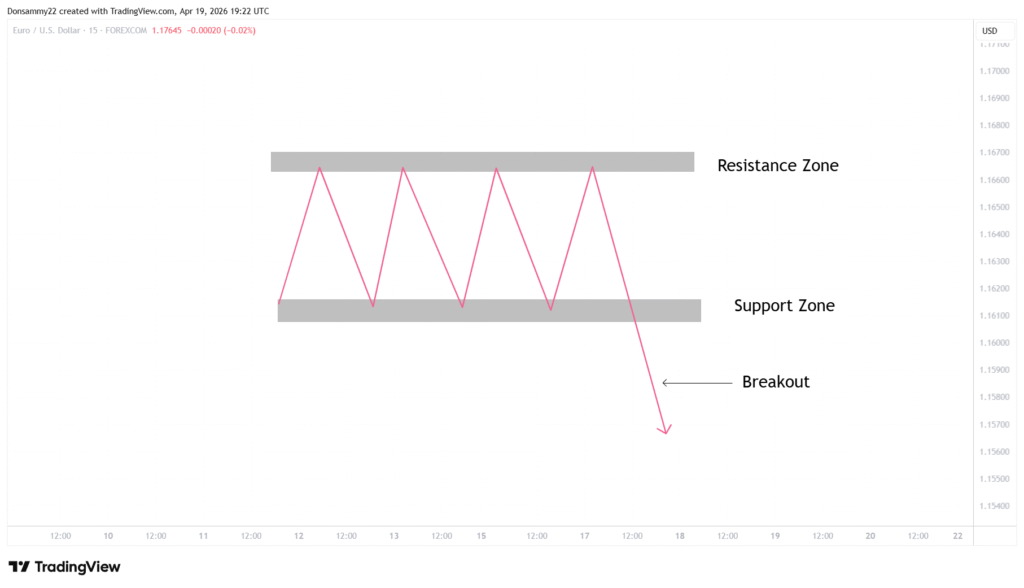
When support becomes weak, it means buyers are no longer strong enough to hold price. Sellers then take control and break the support level.
The same thing applies to resistance. When resistance becomes weak, buyers take control and break above it.
Support and Resistance Always Exist
Support and resistance are always present in the market. They are one of the key structures that form price movement.
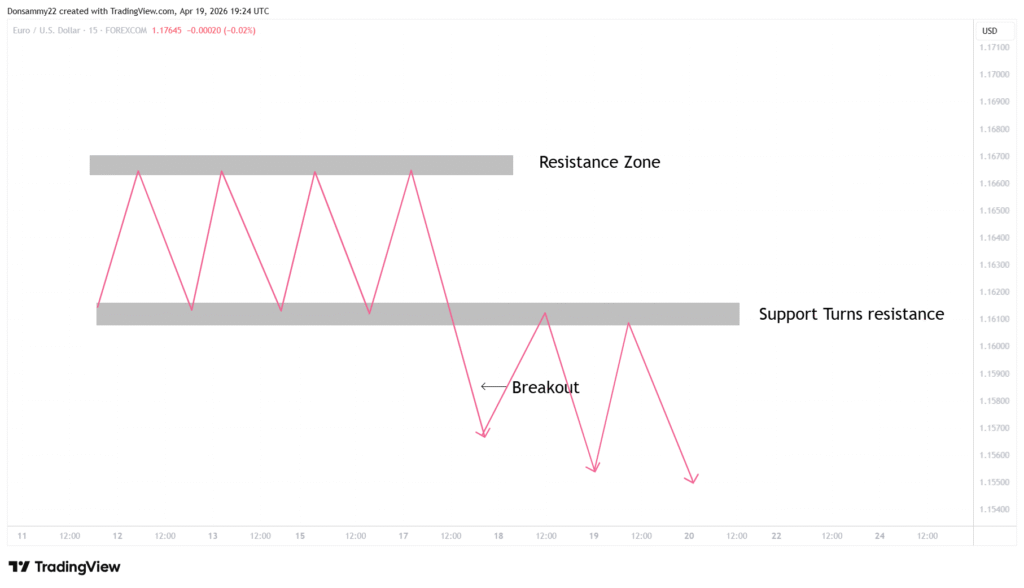
An important concept to understand is this:
When support is broken, it can turn into resistance.
When resistance is broken, it can turn into support.
This cycle continues as the market moves.
Why Support and Resistance Are Important
Support and resistance help you understand where the market may change direction.
Instead of entering trades randomly, you focus on areas where price has reacted before.
When I first started trading, I ignored this and entered trades anywhere. That mistake cost me time and money. Once I started using support and resistance properly, my entries became more accurate.
Support and resistance help you find better entry points, reduce risk, avoid bad trades, and improve your confidence.
Even as you grow in trading, most strategies still depend on these levels.
The Psychology Behind Support and Resistance
Support and resistance work based on market psychology.
When price reaches a level where it previously reversed, traders remember that level and place orders there again.
For example, if price drops to a level and moves upward, traders see it as support and may buy again when price returns.
The same happens with resistance. If price rises to a level and falls, traders may sell again when price comes back.
This repeated behavior is what creates strong levels in the market.
Types of Support and Resistance in Forex
There are two main types of support and resistance you should focus on as a beginner.
Trendline Support and Resistance
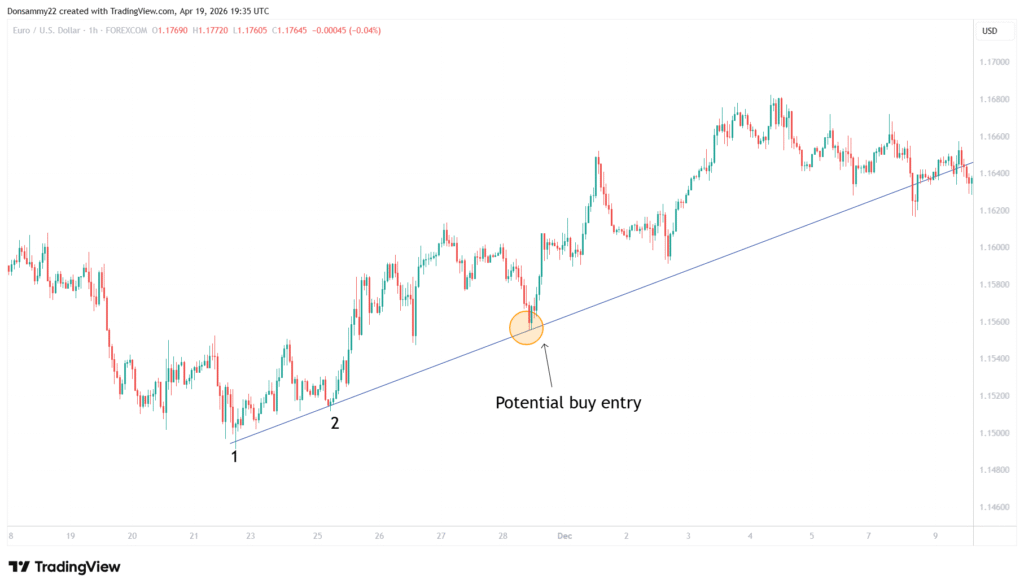
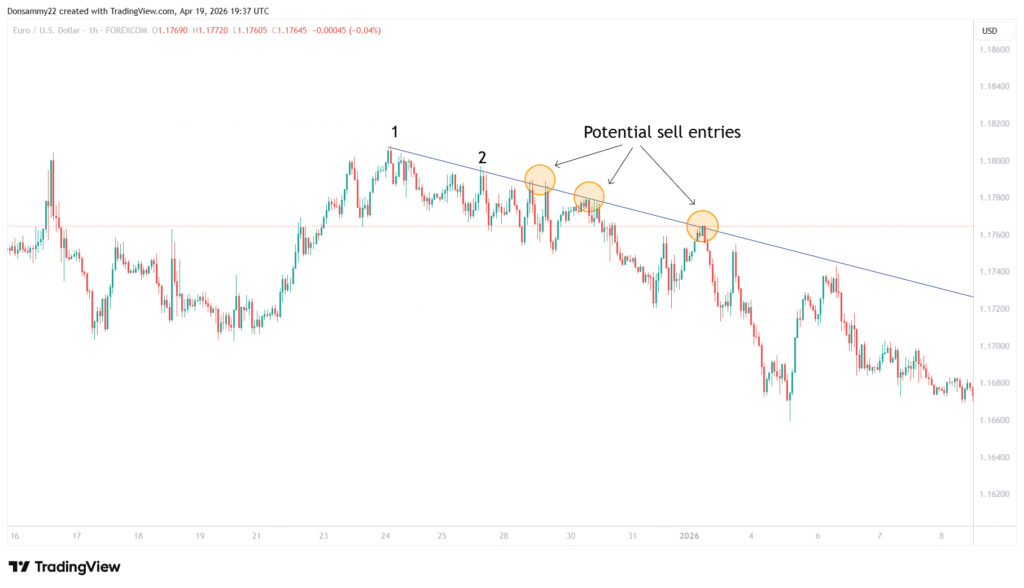
These are drawn as straight lines across areas where price has reacted multiple times.
They are simple and effective, and this is what most beginners should focus on first.
Indicator-Based Support and Resistance
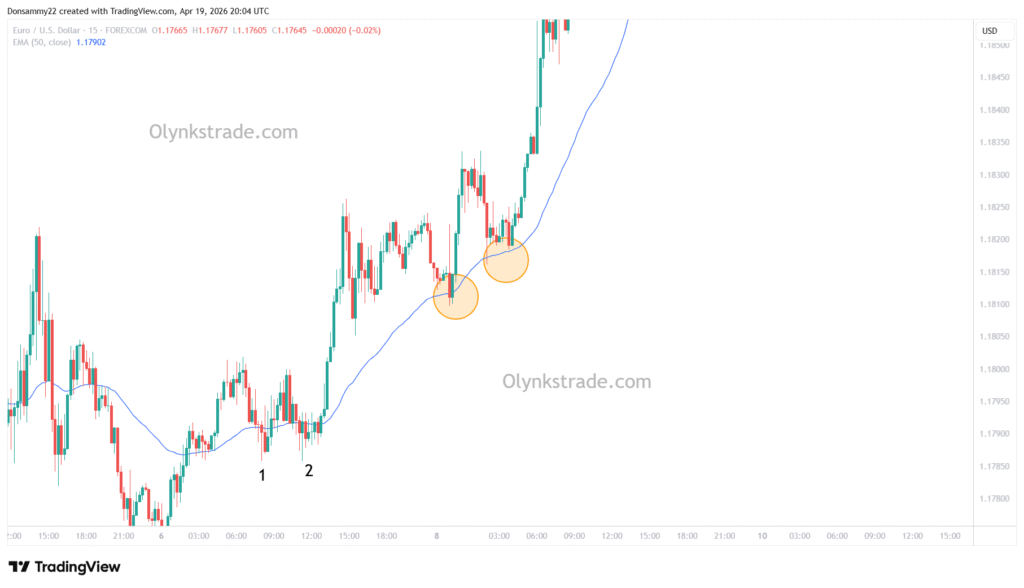
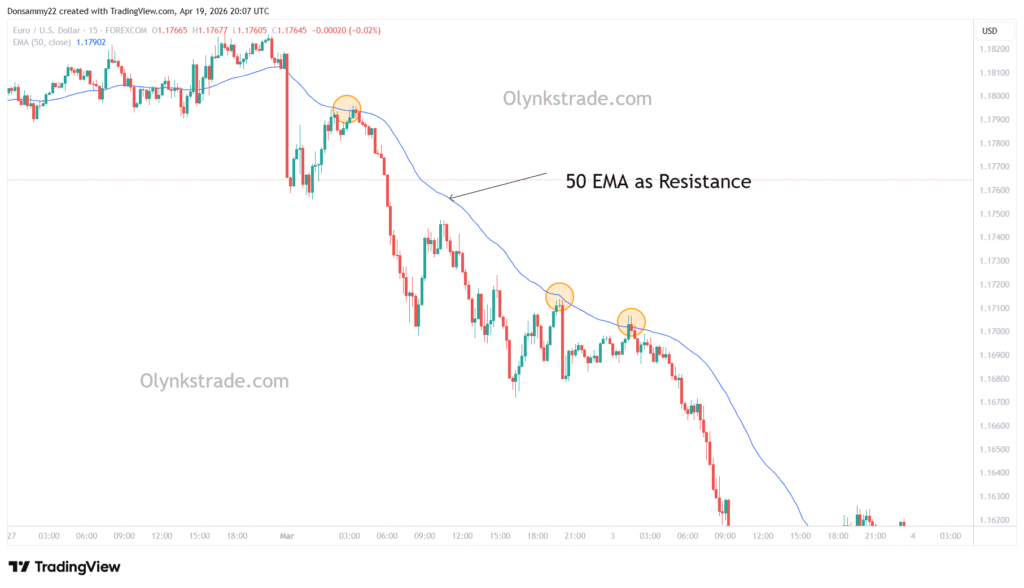
These levels are generated using indicators and past data. They are not fixed like trendlines and can change over time.
As a beginner, focus more on trendline levels before moving to this type.
How to Draw a Valid Support and Resistance Level
Drawing support and resistance in forex is simple, but many beginners overcomplicate it.
When I first started trading, I made the mistake of drawing too many lines on my chart. It became confusing, and I could not make clear decisions. Over time, I learned that less is better.
To draw support and resistance correctly, firstly i recommend switching to line chart then look for areas where price has reversed at least two times.
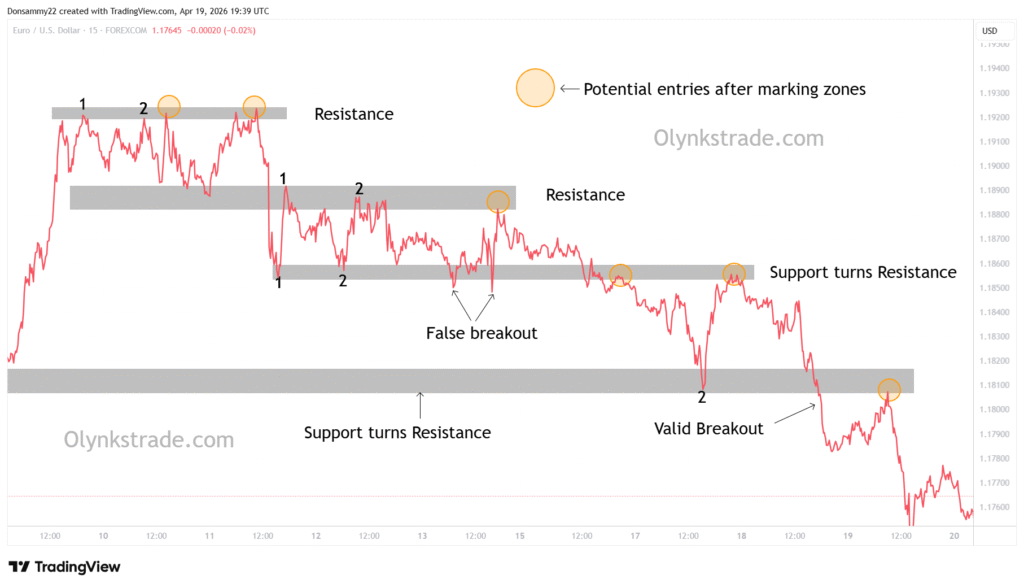
Draw your line across those areas, not just a single point.
Focus on zones instead of exact lines because price does not always react at the same level.
Avoid drawing too many Zone. Only mark the most obvious levels. If you cannot clearly see it, it is probably not important.
Support and Resistance Trading Strategy
Support and resistance in forex become powerful when combined with what you have already learned.
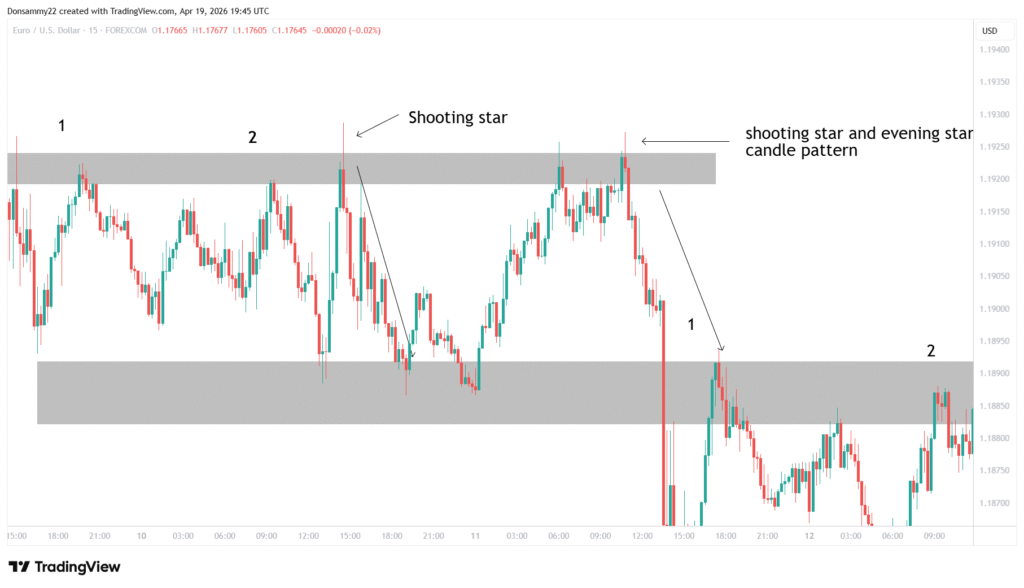
For example, if price reaches a support level and forms a bullish candlestick pattern, it increases the probability of a buy.
If you don’t understand candle pattern yet, read 9 Powerful Must-Know Candlestick Patterns for Beginners to Master Forex Trading
If price reaches a resistance level and forms a bearish pattern, it increases the probability of a sell.
This combination is called confluence, where multiple factors support your decision.
A simple strategy for beginners is to trade reactions at key levels.
To Buy
When price approaches support, wait for confirmation such as a bullish candle pattern before buying.
To Sell
When price approaches resistance, wait for confirmation such as a bearish candle before selling.
When price breaks a strong support or resistance level and closes beyond it, it may continue in that direction.
However, you must be careful of false breakouts and always wait for confirmation. So you don’t get confuse, let me quickly explain breakouts to you.
Breakouts in Support and Resistance
A breakout happens when price breaks through a support or resistance level.
There are two types of breakouts.
Valid Breakout
A valid breakout occurs when price breaks a level and continues moving in that direction. The broken level may then act as a new support or resistance.
False Breakout
A false breakout happens when price breaks a level but quickly returns back into the zone.
This is where many beginners get trapped.
To avoid this, always use confirmation and combine it with confluence.
Common Mistakes Beginners Make
Many beginners make mistakes when using support and resistance.
One common mistake is drawing too many lines, which creates confusion.
Another mistake is treating levels as exact points instead of zones. Price needs space to move.
Some traders also enter trades without confirmation, which increases risk.
When I first started trading, I made these mistakes, especially entering trades too early. Learning patience made a big difference.
Quick Assessment
Imagine price has been bouncing from a certain level multiple times. Each time it gets there, it moves upward.
This level becomes a strong support.
Now, when price returns to that level and forms a bullish pattern, could this be a good buying opportunity?
YES, because you have both support and candlestick confirmation. This is how professional traders think.
What You Should Learn Next
Now that you understand support and resistance in forex, the next step is learning how to identify market trends.
Understanding trend direction will help you decide whether to buy or sell at these levels.
Key Takeaway
Support and resistance are one of the most powerful concepts in forex trading.
They help you understand where price is likely to react instead of trading blindly.
Once you combine support and resistance with candlestick patterns, your trading becomes more structured and confident.
Take your time to practice drawing levels and observing how price reacts to them.
You can also check Support and Resistance Basics – Investopedia

Leave a Reply to Powerful Risk Management in Forex, Techniques Every Beginner Must Know (2026 Guide) Cancel reply