
If there is one thing that can keep you in the market long enough to become profitable, it is risk management in forex.
Most beginners focus on strategy, indicators, and finding the perfect entry. I did the same at the beginning. I believed once I found a “perfect setup,” everything else would fall into place.
That mindset cost me.
I could win a few trades and then lose everything in one bad trade. At some point, I realized the issue was not my strategy, it was how I was managing risk.
There was a time I was trading synthetic indices, specifically Crash 500, trying to catch spikes. The trade moved against me, but instead of accepting the loss, I kept adding positions. Within minutes, I lost everything I had built for about a month.
That moment changed how I approached trading.
In this guide, you will learn how to manage risk in forex trading in a simple and practical way so you can protect your account and grow consistently.
Table of Contents
Risk Management in Forex
Risk management in forex is how you control how much money you can lose on a trade.
It is not about making more money. It is about protecting your capital first.
Because the truth is simple: if you do not protect your money, you will not have anything left to trade with.
Why Risk Management Is Important
Risk management is what keeps you in the game.
Even a good strategy can fail without proper risk control.
Think of trading like a business. Every business has risks and expenses. The goal is not to avoid losses completely but to manage them properly.
Risk management helps you:
- protect your trading account
- reduce emotional decisions
- survive losing streaks
- stay consistent over time
This is where most beginners struggle.
The Golden Rule of Risk Management
Never risk too much on a single trade.
As a beginner, a safe rule is to risk only a small percentage of your account per trade.
Most professional traders risk between 1% and 2% per trade.
This means even if you lose multiple trades, your account remains stable.
How Much Should You Risk Per Trade
Let’s keep it simple.
If you have a $100 account and you risk 1% per trade, you are risking $1.
Even if you lose 10 trades in a row, your account is still largely intact.
Now imagine risking 20% per trade. Just a few losses can wipe out your account completely.
This is why risk control matters more than chasing profits.
Over time, as you gain experience, your risk can be adjusted based on your win rate and what you are comfortable losing.
There is no fixed rule forever, but discipline must always remain constant.
Understanding Risk to Reward Ratio
Risk to reward ratio is how much you are willing to risk compared to how much you want to gain.
For example:
- Risk $1 to make $2 (1:2 ratio)
- Risk $5 to make $30 (1:6 ratio)
This means you can still be profitable even if you lose more trades than you win.
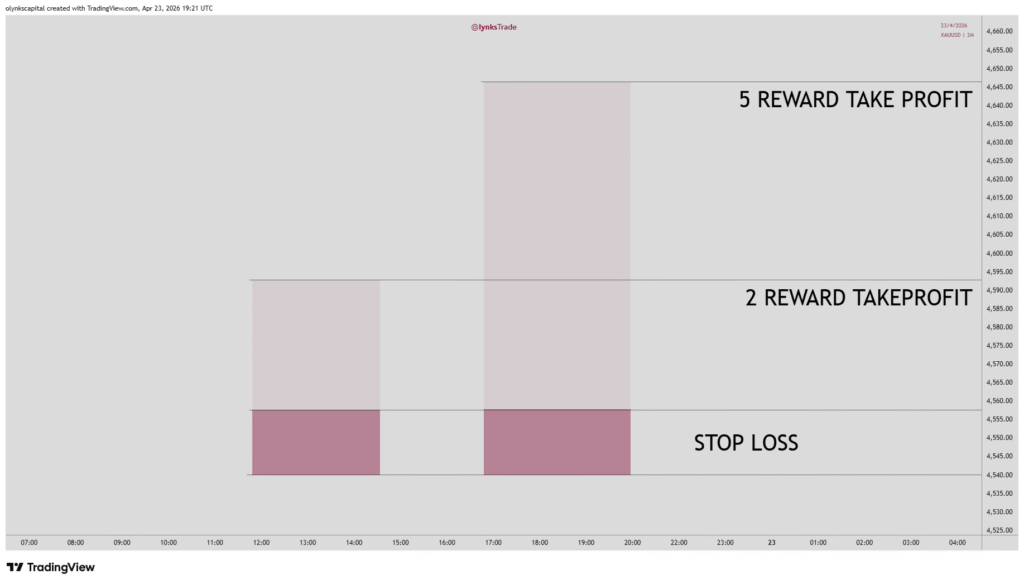
Early in my journey, I ignored this completely. I was risking more than I was aiming to gain. I did not even understand how important this concept was. I was simply stacking positions without structure, and it made no sense in the long run.
Stop Loss (Your Safety Tool)
A stop loss is a tool that automatically closes your trade when price reaches a certain level.
It protects you from losing more than you planned.
Every trade you take should have a stop loss.
Trading without a stop loss is like driving without brakes.
Position Sizing (Controlling Your Trade Size)
Position sizing is how you adjust your trade size based on your risk.
Instead of randomly choosing a lot size, you calculate it based on:
- your account size
- your risk percentage
- your stop loss distance
This ensures your risk stays consistent on every trade.
You can also use our Lot size calculator to determine how much to risk per trade.
Combining Everything Together
Now let’s connect everything.
A solid trade setup includes:
- clear trend direction
- support or resistance level
- candlestick confirmation
- proper risk management
For example, after identifying a trend using what you learned in How to Identify Market Trends in Forex, you can wait for price to reach a key level from your How to Identify Support and Resistance in Forex guide, then confirm with a candlestick pattern from Candlestick Patterns for Beginners before entering a trade.
This is how structured trading works.
Common Risk Management Mistakes
Many beginners struggle with risk management.
One common mistake is risking too much per trade.
Another mistake is removing the stop loss when the trade goes against them.
Some traders also increase their lot size after a loss to recover quickly, which often leads to bigger losses.
I made this mistake more times than I can count. Trying to recover losses immediately usually makes things worse.
The Psychology Behind Risk Management
Risk management is not just about numbers. It is about discipline.
If you cannot follow your risk rules, even the best strategy will fail.
The goal is to remain calm and consistent, not emotional.
Quick Assessment
If you risk 1% per trade and lose 5 trades in a row, is your account still safe?
Yes.
If you risk 20% per trade and lose 5 trades, what happens?
Your account is almost gone.
This is why risk management is important.
What You Should Learn Next
Now that you understand risk management in forex, the next step is learning how to combine everything into a complete trading plan.
Key Takeaway
Risk management is what keeps you in the market.
It is not about how much you can make. It is about how much you can protect.
Once you master risk management, your trading becomes more stable and less emotional.
Take it seriously. This is where real traders are separated from beginners.
learn more about managing trading risk https://www.fxcm.com/markets/insights/risk-management-in-trading/

Leave a Reply