
Table of Contents
If you’ve ever traded on a demo account and felt confident, then switched to a live account and suddenly started making mistakes, you are not alone.
This is one of the biggest shocks every trader experiences.
On demo, everything feels easy.
You follow your rules.
You wait for setups.
You stay calm.
You thought to yourself, you have it all figured out.
Then you go live.
Suddenly:
- you close trades too early
- you move your stop loss
- you take trades you normally wouldn’t
- Your emotion started playing games on you
I’ve been there.
There was a time I was doing very well on demo. I thought I had figured it out. The moment I switched to live trading, everything changed.
That was when I realized something important.
Demo trading and live trading in forex are not the same thing.
In this guide, you will understand demo and live trading in forex, why the difference exists, and how to transition properly without blowing your account.
Demo Trading
Demo trading is practicing trading using virtual money. (Funds you cant withdraw)
Most brokers provide demo accounts so beginners can:
- learn how the platform works
- test strategies
- practice without risk
There is no real money involved.
Which means:
there is no emotional pressure.
Live Trading
Live trading is when you trade using real money. (you can withdraw)
Now every decision matters.
Every profit feels real.
Every loss hurts.
This is where psychology becomes very important.
The Real Difference between Demo and Live Trading in forex
Let’s be honest.
The biggest difference is not the strategy.
It is emotions.
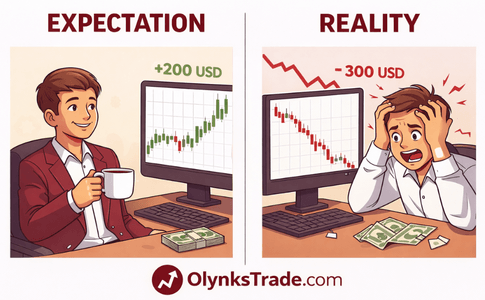
1. No Emotions vs Real Emotions
On demo:
- you are relaxed
- losses don’t hurt
- you follow your plan easily
On live:
- fear kicks in
- greed shows up
- you start doubting yourself
This is why your trading psychology becomes more important than your strategy.
2. Risk Feels Different
On demo, losing money means nothing.
On live, even a small loss feels significant.
This is why many traders:
- close trades early
- avoid valid setups
- overreact
3. Discipline Changes
On demo, you can be disciplined without effort.
On live, discipline becomes a skill.
You now have to control:
- your emotions
- your decisions
- your impulses
4. Execution Pressure
When trading live, everything feels urgent.
You feel like:
- you might miss the move
- you need to act fast
- you should enter quickly
This leads to mistakes.
Why Many Traders Fail When Switching to Live
This is where most beginners struggle.
Not because they don’t know how to trade.
But because they are not prepared for the psychological shift.
Common reasons:
- they risk too much
- they expect instant profit
- they abandon their trading plan
- they ignore risk management
I made this mistake too.
Instead of treating live trading as a continuation of my plan, I treated it like a chance to “make money quickly.”
That mindset is dangerous.
How to Transition from Demo to Live Trading Properly
Now let’s fix it.
1. Start with a Small Account
Don’t go all in.
Start small.
The goal is not to make money immediately.
The goal is to adjust to real emotions.
2. Keep the Same Strategy
Use the same strategy you tested during backtesting in forex and demo practice.
Do not change your system.
Consistency is key.
3. Follow Your Trading Plan
This is where your forex trading plan becomes critical.
Your plan should guide:
- entries
- exits
- risk
If you don’t follow it, results will be random.
4. Apply Proper Risk Management
This connects directly to your risk management in forex.
Risk small.
Even if you lose, your account stays safe.
5. Accept That It Will Feel Different
This is important.
You will feel uncomfortable.
That is normal.
The goal is not to eliminate emotions.
The goal is to manage them.
6. Focus on Process, Not Profit
Stop thinking:
“How much can I make?”
Start thinking:
“Did I follow my rules?”
This shift changes everything.
The Truth Most People Don’t Tell You
Demo trading shows you if your strategy works.
Live trading shows you if you can follow it.
That is the real difference.
Imagine this:
On demo:
- you enter a trade
- it goes slightly against you
- you stay calm
On live:
- same setup
- price moves slightly against you
- you panic and close early
Same market.
Different reaction.
That is psychology.
If your strategy works on demo but fails on live, is the strategy the problem?
No.
If you change your rules when real money is involved, what is the problem?
Your discipline.
What You Should Read Next
Now that you understand demo vs live trading in forex, the next step is learning how to choose a reliable forex broker.
Key Takeaway
Demo trading is for learning.
Live trading is for mastering yourself.
The market does not change.
Your emotions do.
Once you learn to control that, everything else starts to fall into place.
Take your time with this stage.
This is where many traders fail, but also where serious traders are built.
learn more on how demo trading works in forex https://www.oanda.com/us-en/trading/learn/introduction-to-forex-trading/

Leave a Reply