

Table of Contents
Introduction
False breakouts in forex trading can be so annoying, imagine placing a trade just to be stopped out and price immediately reverse going exactly as you analyzed.
Price breaks a support or resistance level, you enter the trade confidently… then suddenly the market reverses completely.
Welcome to the world of false breakouts.
At first, false breakouts can make you feel like the market is targeting your entries personally.
You wait patiently for a breakout.
The breakout finally happens.
You enter immediately.
Then boom.
Price reverses aggressively like nothing happened.
I went through this phase a lot during my early trading journey.
Any small breakout I saw, I entered instantly because I thought every breakout meant “strong momentum.”
But over time, I realized something important:
Not every breakout is valid.
Some breakouts are simply traps created by market volatility, liquidity grabs, or impatient traders rushing entries too early.
This is why understanding false breakouts is very important in forex trading.
In this guide, you will learn how false breakouts work, why they happen, and how traders reduce the chances of getting trapped by them.
What Is a False Breakout in Forex?
A false breakout happens when price breaks above or below a key level but fails to continue moving in that direction.
Instead of continuing strongly, price reverses back into the zone.
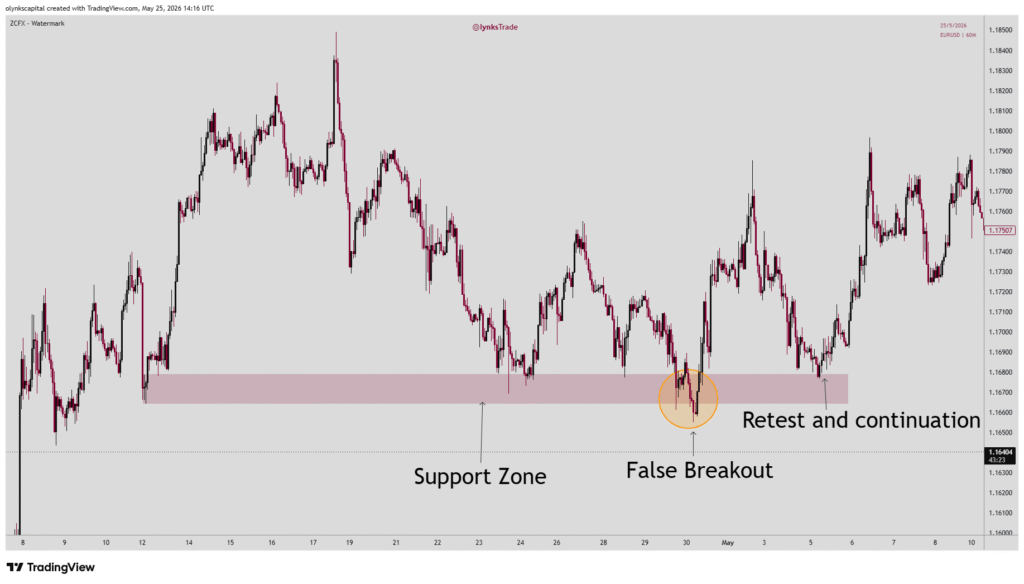
For example:
Price breaks above resistance.
Buyers rush in expecting continuation.
Then suddenly price reverses downward and traps buyers.
The same thing happens with support levels too.
This is why many traders call them:
fake breakouts,
breakout traps,
or liquidity grabs.
Why False Breakouts Happen
The forex market moves because of liquidity.
Many traders place stop losses around obvious support and resistance zones.
The market sometimes pushes beyond these levels temporarily before reversing sharply.
This movement can trigger:
- breakout entries
- stop losses
- emotional reactions
Then after collecting liquidity, price reverses.
This is why patience matters heavily in breakout trading.
Why Beginners Get Trapped Easily

Most beginners enter breakouts too early.
The moment price slightly crosses a level, they immediately enter without waiting for confirmation.
I used to do this a lot too.
Small candle breaks resistance…
I buy instantly.
Then the market sends me back to reality immediately.
The problem is that many traders confuse:
price touching a level,
with a confirmed breakout.
Those two things are completely different.
How to Identify a Valid Breakout
A valid breakout usually shows strong momentum and proper confirmation.
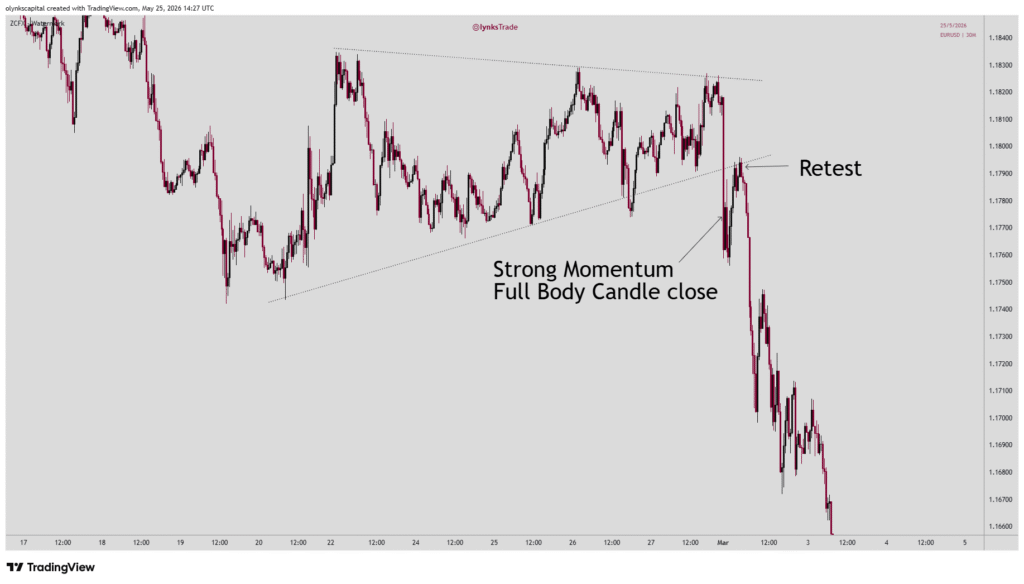
Instead of entering immediately after one candle poke, professional traders often wait for additional confirmation. you should understand wick touch and rejection is different from full body candle close, these two candles explains different story
This can include:
- a strong candle close beyond the level
- increased momentum
- retest confirmation
- alignment with higher timeframe trend
This is where top down analysis becomes powerful.
If the higher timeframe already supports the breakout direction, the probability becomes stronger.
This is why understanding What Is Top Down Analysis in Forex can help you filter weak breakout setups.
1. Wait for Candle Close
One of the easiest ways to reduce false breakouts is simply waiting for candle closure.
Many fake breakouts happen during active candle movement.
Price temporarily spikes beyond the level but closes back inside the zone before the candle finishes.
Patience here can save you from unnecessary entries.
Sometimes the market rewards traders who wait instead of reacting too quickly.
2. The Break and Retest Strategy
This is one of the safest breakout approaches many traders use.
Instead of entering immediately after the breakout, traders wait for price to:
break the level,
return to retest it,
then continue moving.
For example:
Resistance breaks upward.
Price pulls back slightly to retest the broken resistance.
That resistance now starts acting as support.
Then bullish confirmation appears.
This often provides cleaner entries compared to chasing candles emotionally.
This guide will help you understand better: How To trade Support and Resistance Like an Expert
3. Avoid Trading Every Breakout
Not every breakout deserves your money.
Some market conditions are simply messy.
When the market is ranging heavily or moving without clear momentum, breakout quality becomes weaker.
This is where patience and discipline matter.
Good traders understand that skipping weak setups is also part of trading.
4. Volume and Momentum Matter
Strong breakouts usually move with momentum.
Weak breakouts often look slow, hesitant, or unstable.
If price barely breaks a level without strong movement, be careful.
The market may simply be testing liquidity temporarily.
Momentum helps traders see whether buyers or sellers are truly in control.
5. Emotional Breakout Entries
Fear of missing out is another reason traders get trapped.
Price starts moving quickly and suddenly traders feel:
“If I don’t enter now, I will miss the move.”
Then they chase the breakout emotionally.
Many false breakouts feed on this exact emotion.
This is why patience is one of the biggest skills in trading.
If it does not align with your strategy and analysis “Do not trade”
6. Combine Breakouts With Confluence
Breakouts become stronger when combined with other confirmations.
For example:
- higher timeframe trend alignment
- support and resistance zones
- candlestick confirmation
- proper risk management
This is called confluence.
The more factors supporting the setup, the stronger the probability becomes.
If you still struggle with confirmations, reading Candlestick Patterns for Beginners will help you understand how traders confirm breakout entries properly.
7. Risk Management Still Matters
Even valid breakouts can fail sometimes.
No setup wins 100% of the time.
This is why risk management remains extremely important.
Never assume a breakout “must” work.
Always define:
your stop loss,
position size,
and acceptable risk before entering.
Because one emotional breakout trade should never destroy your entire account.
Quick Assessment
If price slightly breaks resistance but closes back below the level, could that be a false breakout?
Yes.
Should you enter every breakout immediately without confirmation?
No.
Key Takeaway
False breakouts are very common in forex trading.
They trap impatient traders who enter too early without confirmation.
Learning to wait for:
proper candle closure,
momentum,
retests,
and higher timeframe alignment can help you avoid many bad breakout entries.
Remember:
not every breakout is a real breakout.
Sometimes the market is simply testing traders’ patience.
If you want to learn more about fake breakouts and how traders identify them, you can also read this guide from False Breakouts Explained by PriceAction.com

Leave a Reply